How Long Does Concrete Take to Cure?
You’ve just had a fresh slab poured — or you’re in the planning phase and trying to understand what happens after the truck leaves. One of the most common questions homeowners ask is how long concrete takes to cure, and more practically, when they can actually use it. The answer involves a distinction that often gets overlooked: concrete doesn’t just dry, it cures. Understanding that difference — and what affects the timeline — helps you protect your investment and avoid costly mistakes in those critical first weeks.
Drying vs Curing — Why the Distinction Matters
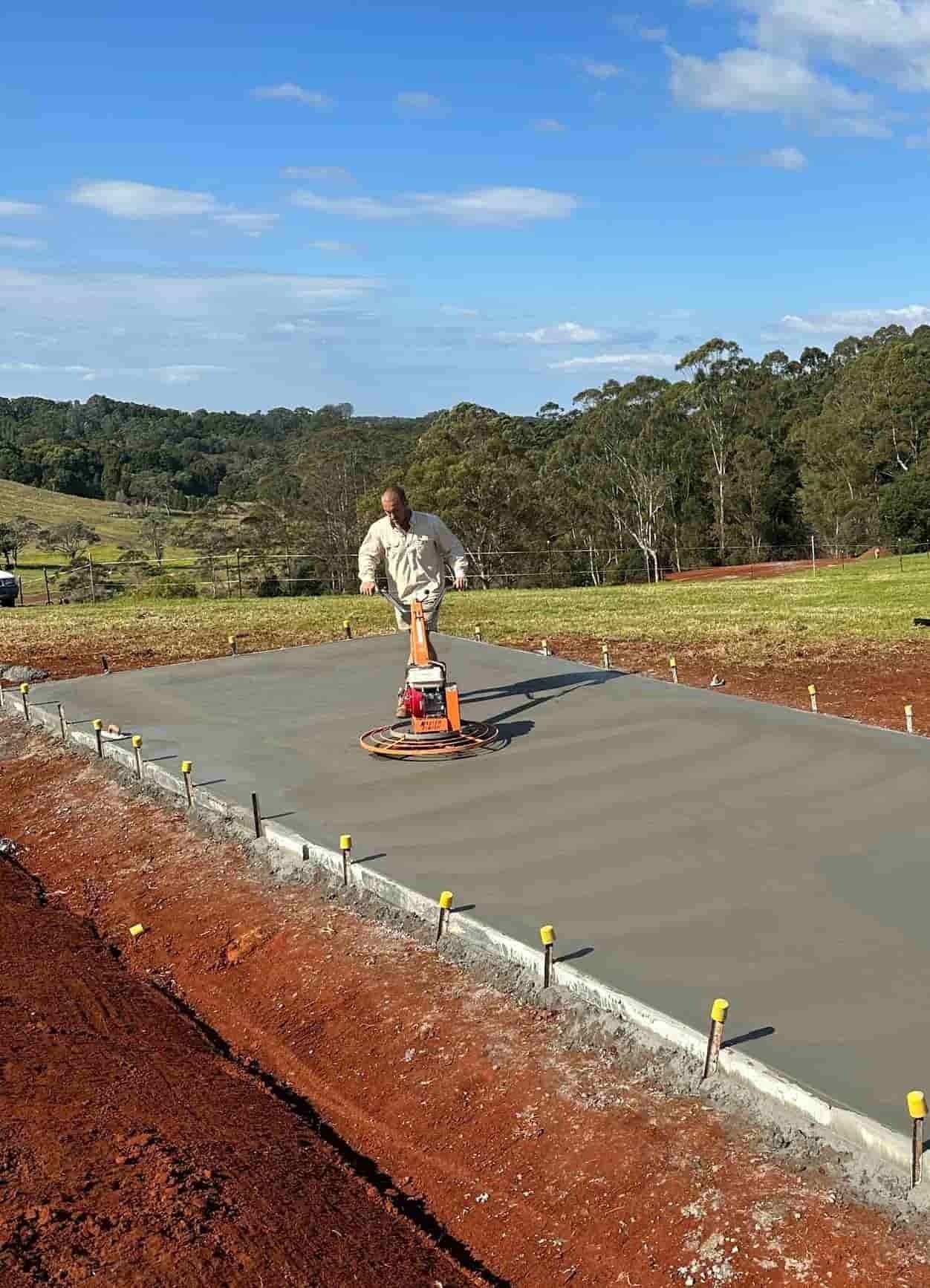
These two terms are often used interchangeably, but they describe very different processes. Drying refers to the evaporation of surface moisture, which can happen within hours depending on conditions. Curing is a chemical reaction — known as hydration — in which water reacts with cement particles to form the crystalline structure that gives concrete its strength.
A slab can feel completely dry to the touch and still be nowhere near its full structural strength. This is where many homeowners get into trouble. Driving on concrete that looks set but hasn't completed its curing process can cause cracking, surface damage, and long-term structural weakness. The concrete curing process cannot be rushed simply because the surface has lost its sheen.
The Standard Concrete Curing Timeline
While conditions vary, there's a widely accepted timeline that applies to most standard concrete mixes:
- 24 to 48 hours — the slab has hardened enough to support careful foot traffic, but heavy loads should stay off entirely.
- 7 days — concrete has reached approximately 70 per cent of its design strength. Light vehicle traffic may be acceptable depending on the mix and application.
- 28 days — the benchmark for full strength. Concrete curing time to this point is the industry standard, and most engineers and concrete contractors in Ballina reference this milestone when specifying load-bearing capacity.
Concrete doesn't stop strengthening at 28 days — it continues to gain marginal strength over months — but the 28-day mark is where it's considered structurally complete for practical purposes.
When Can You Walk on New Concrete?
For most residential slabs, light foot traffic is generally safe after 24 hours. That means careful, flat-soled walking — not children running, heavy boots, or anything with a concentrated contact point like furniture legs or high heels.
The 24-hour guideline assumes reasonably favourable conditions. In hot or dry weather, the surface may have hardened faster on the outside while the interior is still curing, making it more vulnerable to cracking than it appears. In cooler or more humid conditions, 24 hours may not be enough.
When in doubt, wait the extra day. The inconvenience of keeping foot traffic off a slab for 48 hours is minor compared to the cost of repairing surface damage on new concrete in Ballina’s variable coastal climate.
When Can You Drive on New Concrete?
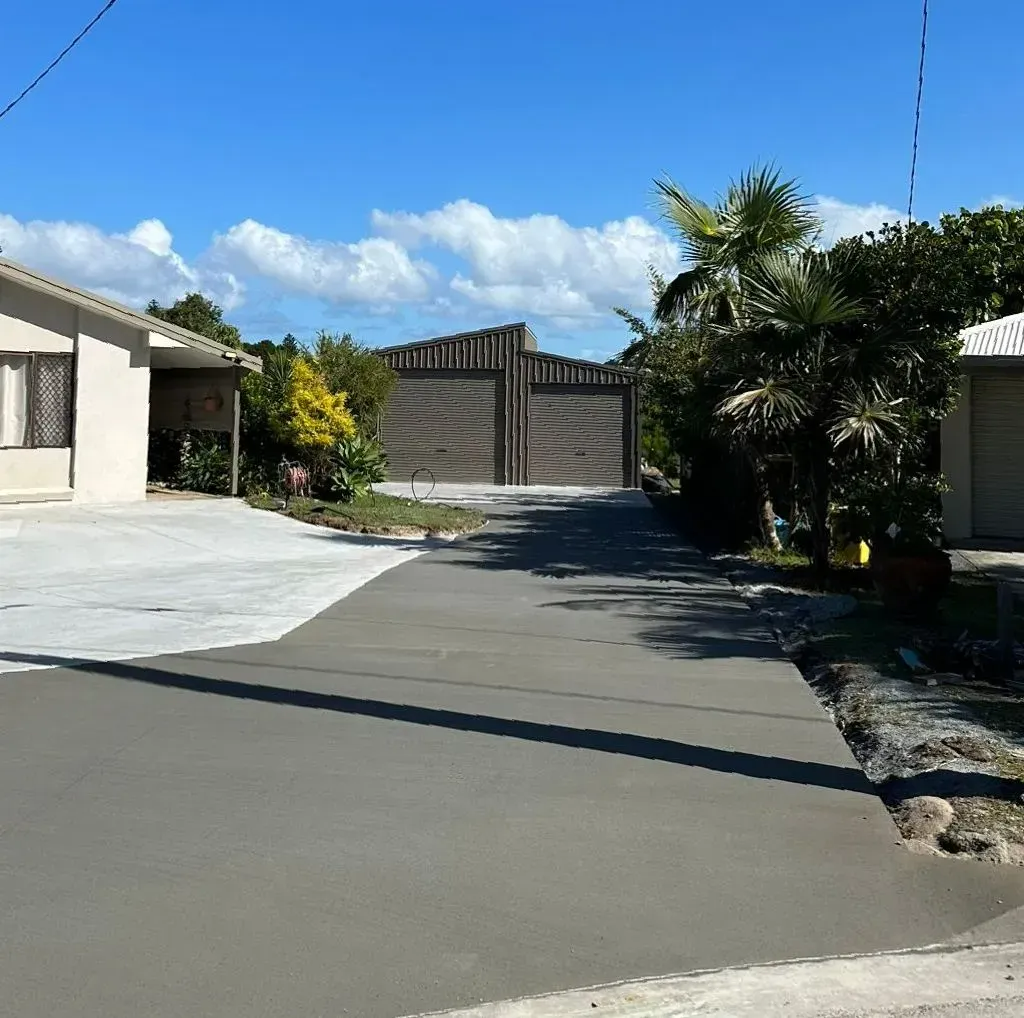
For a new concrete driveway, the standard recommendation is to wait a full seven days before driving on it — and even then, only with standard passenger vehicles. Trucks, trailers, and machinery should not be driven onto a residential driveway until the full 28-day cure is complete.
Driving on concrete before it reaches sufficient strength is one of the most common causes of cracking and surface deterioration on new driveways. The damage often isn't immediately visible — it may develop over subsequent weeks as the weakened structure responds to temperature changes and load. By that point, the link between early vehicle traffic and the resulting damage isn't always obvious, but the underlying cause is the same.
If you’re planning a new concrete driveway in Northern Rivers,
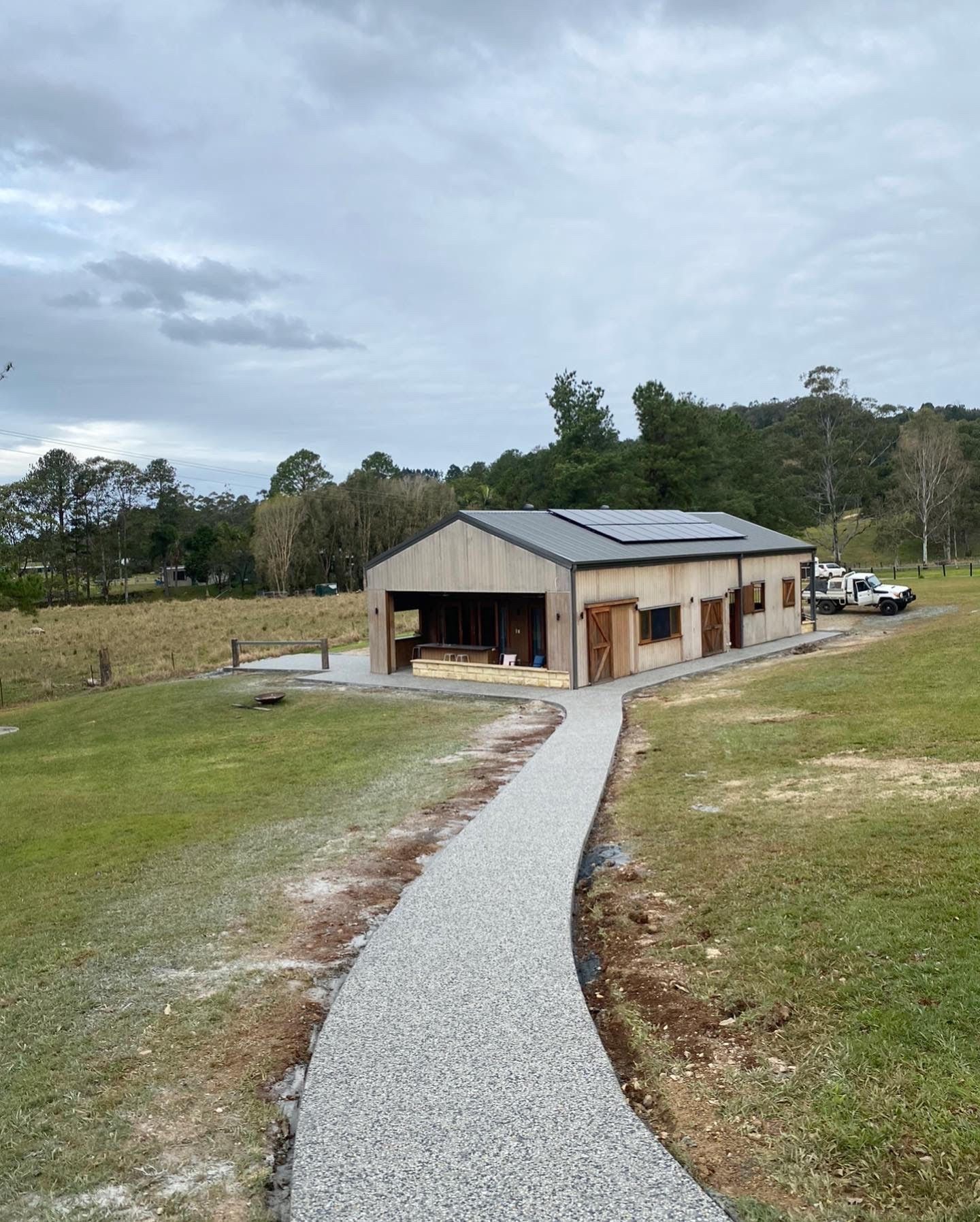
our team pours concrete driveways across the Northern Rivers and always advises on the right curing approach for local weather conditions.
When Can You Seal Concrete?
Sealing is an important protective step for most exposed concrete surfaces — driveways, pathways, and entertaining areas all benefit from a quality sealer applied at the right time. Apply too early and you risk trapping moisture inside the slab, causing surface blistering, discolouration, and a compromised bond between the sealer and the concrete.
The general guidance is to wait a minimum of 28 days before applying any penetrating or film-forming sealer to new concrete. Some manufacturers specify longer periods — always follow the product instructions and check with your concreter if you're unsure.
Once your concrete has fully cured, the next step is ongoing care — it’s important to protect and maintain your concrete surfaces to keep your slab in top condition long-term.
What Affects Concrete Curing Time?
The 28-day timeline is a standard, not a guarantee. Several variables can extend or compress the curing window, and understanding them helps you manage your slab in the weeks after a pour.
Key factors that influence curing time include:
- Temperature — concrete cures most effectively between around 10°C and 32°C. High temperatures accelerate surface drying, which can disrupt the internal curing process by drawing moisture out too quickly.
- Humidity — low humidity increases evaporation, which can cause the surface to dry out before the hydration process is complete.
- Wind — even mild wind accelerates moisture loss, which is why exposed pours on windy days require additional curing measures.
- Concrete mix design — additives, water-to-cement ratio, and aggregate type all influence how quickly a mix reaches strength milestones.
- Slab thickness — thicker slabs retain heat and moisture differently from thin ones, affecting how evenly the curing process progresses through the full depth.
How Ballina’s Climate Affects the Curing Process
Concreting in Ballina comes with specific considerations that don't apply in cooler or drier inland regions. The combination of coastal humidity, warm temperatures, and seasonal rainfall means that concrete curing in Ballina requires careful planning — both in mix design and in the aftercare approach taken once the pour is complete.
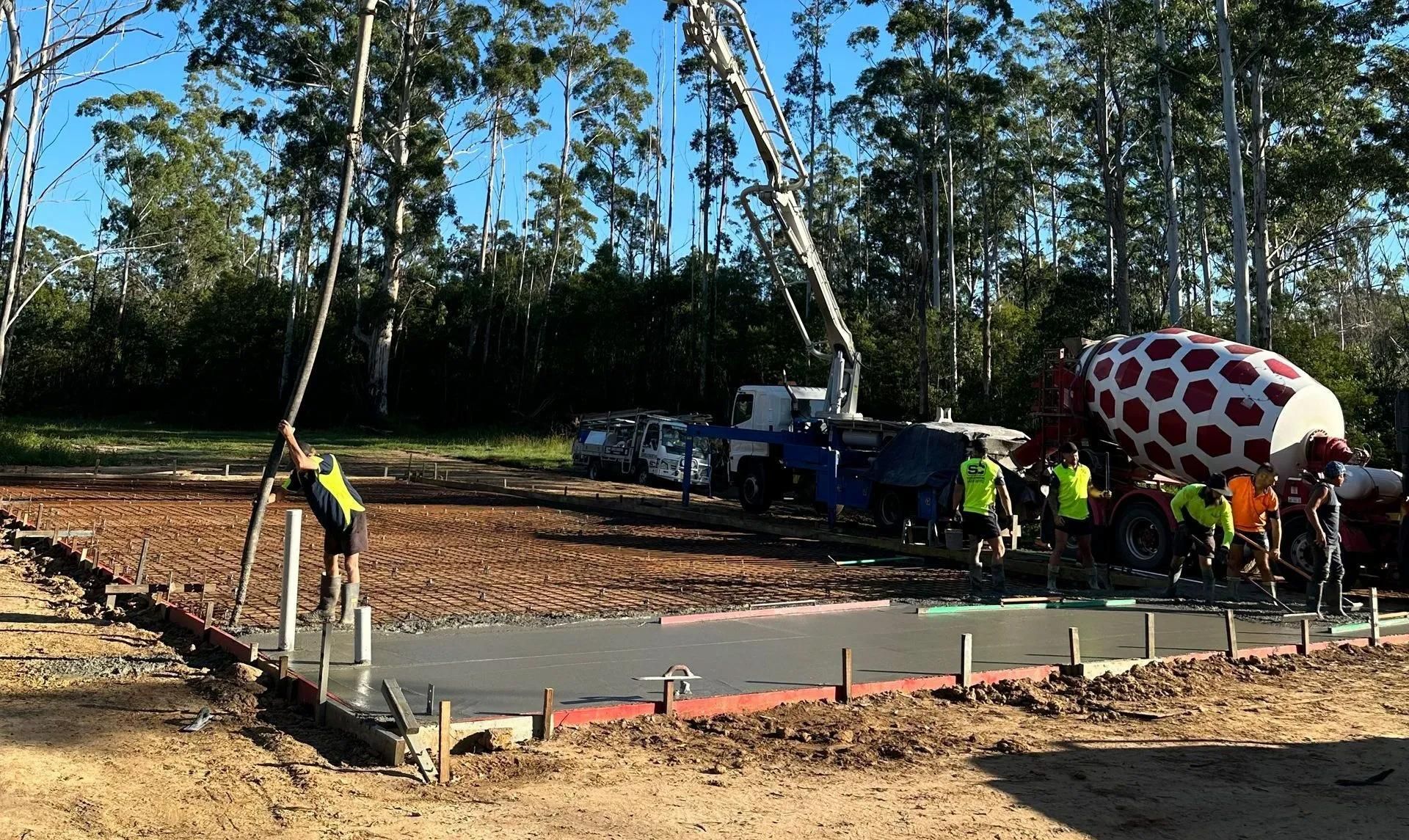
During summer, intense heat and direct sun can cause rapid moisture loss from the surface in the hours immediately after a pour. This is why curing compounds, wet hessian, or plastic sheeting are sometimes applied straight after finishing — not for appearance, but to retain the moisture the hydration process needs to complete properly. Experienced concrete contractors in Ballina factor these conditions into every job, adjusting their approach based on the forecast and time of year.
During wetter periods, rain shortly after a pour can damage the surface finish if the concrete hasn’t yet set sufficiently. Timing a pour around forecast weather is standard practice for concreters in Ballina who understand how quickly local conditions can change.
Practical Curing Tips for Homeowners
Once the pour is done, there are steps you can take to support the curing process and protect your investment during the critical first month:
- Keep the surface moist in the first few days — if no curing compound was applied, lightly misting the surface and covering with plastic sheeting helps retain moisture in warm or dry conditions.
- Avoid heavy vehicles on new concrete — even after seven days, err on the side of caution with anything heavier than a standard passenger car until the full 28-day cure is reached.
- Shade the surface where possible — direct summer sun on a fresh pour accelerates drying and can cause surface cracking. Temporary shade cloth helps where practical.
- Don't apply coatings or sealers early — regardless of product label claims, 28 days is the safe standard for new residential concrete.
- Keep chemicals away — fertilisers, pool chemicals, and cleaning agents can affect uncured concrete. Keep these well clear of the slab during the curing period.
Get in Touch
At Hinterland Concreting Pty Ltd, we work with homeowners and property owners who want quality results and honest advice on what to expect from a concrete project. Whether you're planning a new slab, pathway, or driveway, or you've already had concrete poured and want to know how to care for it properly, our team is here to help. As concreters in Ballina and across the Northern Rivers, we understand how local conditions affect every stage of the process — from mix selection through to curing. If you have questions about your project, get in touch and we'll walk you through it.