How Much Does A Concrete Driveway Cost In NSW?
If you're budgeting for a new concrete driveway, the honest answer is that it depends on your site. Most homeowners are looking at a broad range once you factor in preparation, reinforcement and finish. A basic plain slab sits at the lower end of the scale, while decorative finishes and tricky sites push the number higher. The only way to get an exact figure is a site inspection, but this guide shows what drives that number up or down.
We pour driveways across the Northern Rivers every week, so this isn't textbook theory. It's what we see on real jobs, from easy flat blocks in town to steep, tree-lined hinterland properties. As concreters in Ballina, we quote this way ourselves, every day.
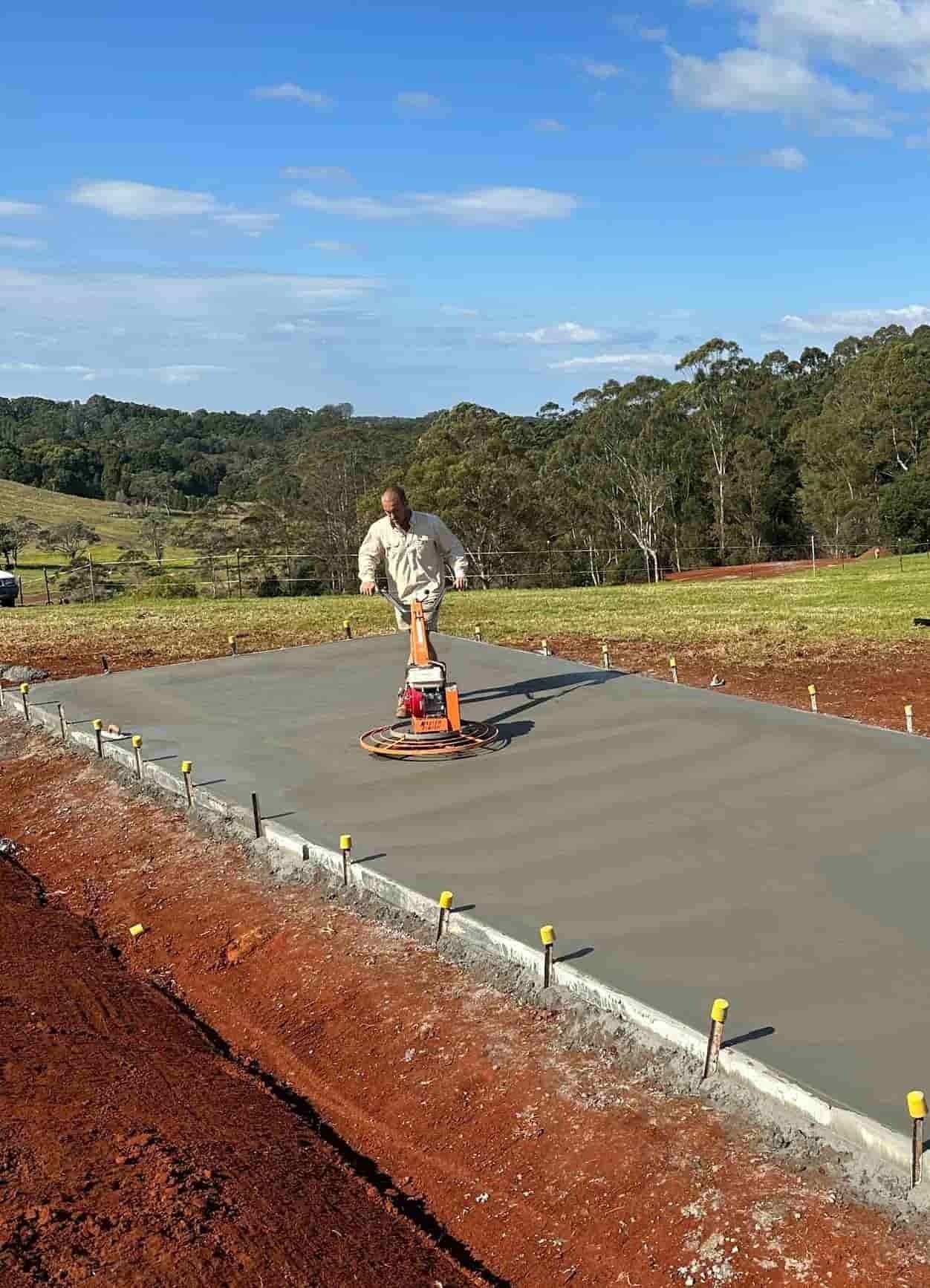
How Much Does a Concrete Driveway Cost in NSW?
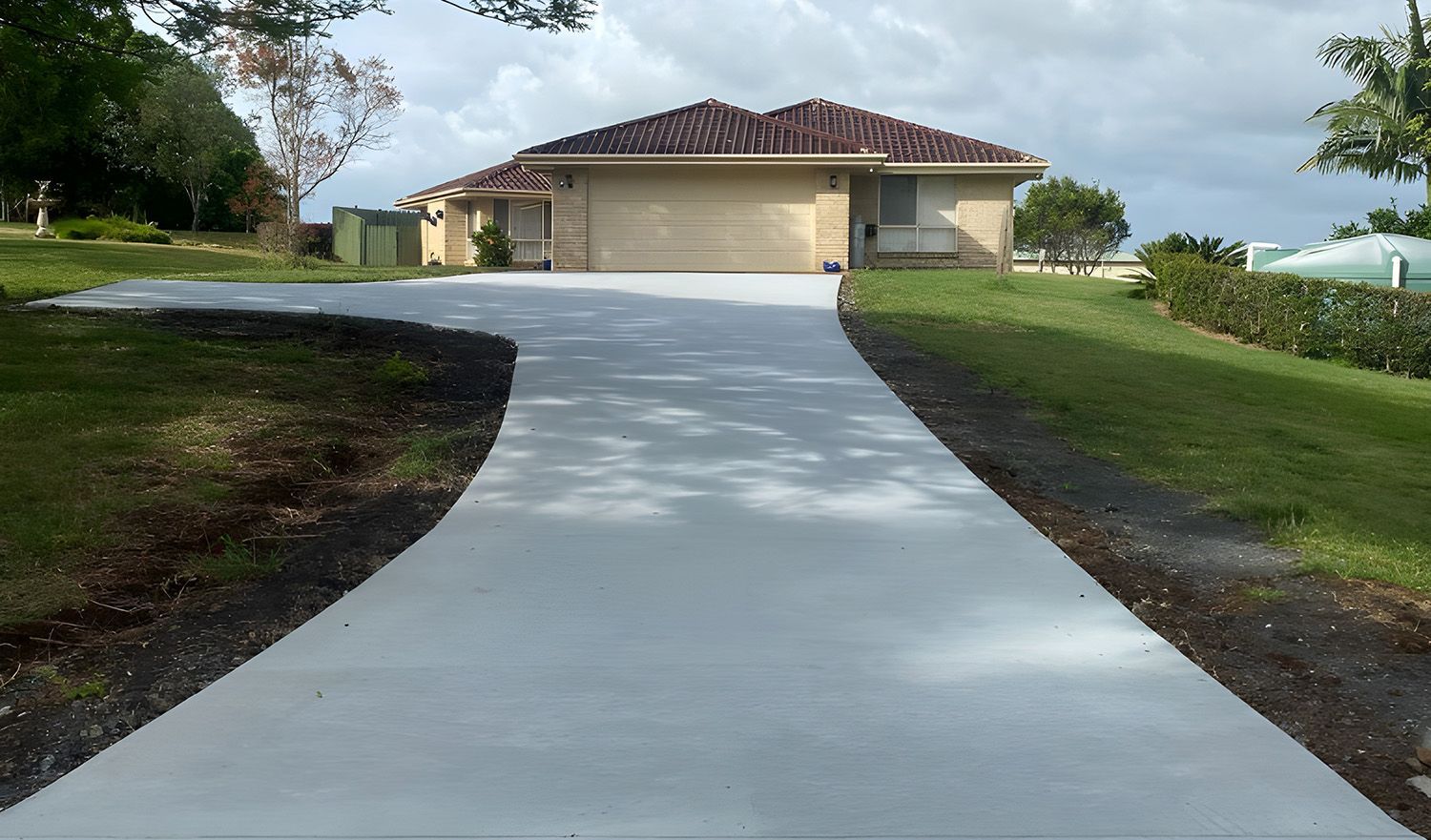
As a rule of thumb, plain concrete sits at the more affordable end of the driveway market, reinforced or broom-finished slabs cost a little more again, and decorative finishes carry the highest premium. Where your job lands within that range depends heavily on your region, site access and council requirements, so treat this as a starting point for a conversation rather than a quote.
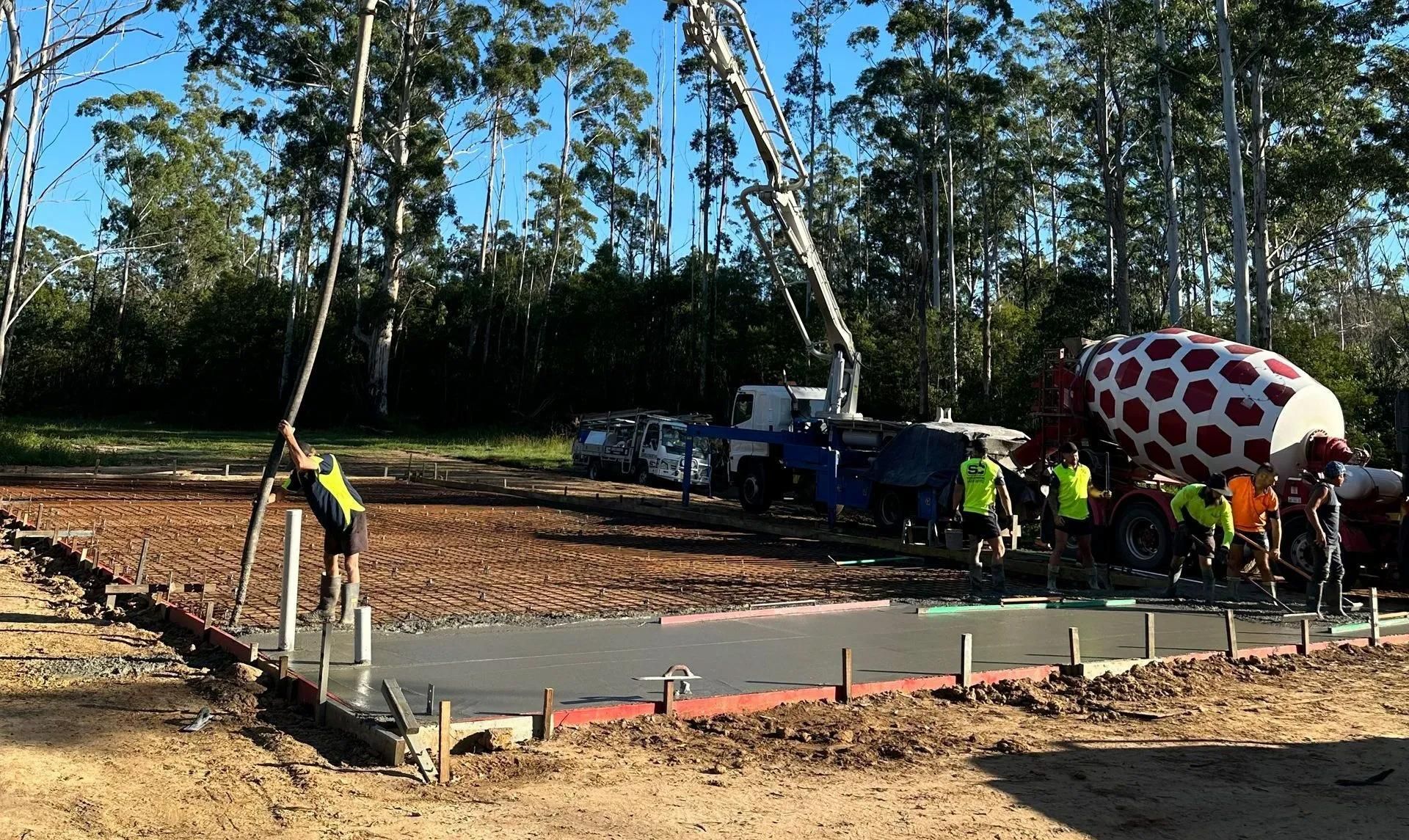
Here's a worked example to make that concrete (pun intended). A typical single-car driveway measures around 40 to 50m². Once you factor in a standard reinforced slab with a broom finish, a straightforward job on an easy, flat site with good access will cost noticeably less than the same size driveway on a sloping or tight-access block, where extra excavation, drainage work or a concrete pump can add a substantial amount to the total. This is a rough guide rather than a promise. Your actual number depends on what we find when we walk your site.
What's Actually Included in a Concrete Driveway Quote?
A proper quote breaks down every stage of the job so you know exactly what you're paying for.
- Site preparation and excavation: removing existing driveway, topsoil or gravel, and cutting the area to the right depth and fall
- Base preparation: compacted road base or aggregate to give the slab a stable, well-drained foundation
- Formwork: the timber or steel edging that holds the concrete in its shape while it cures
- Reinforcement: SL mesh or reinforcing bar, sized to the expected vehicle loads
- Concrete supply and placement: including whether it's poured by chute or pumped
- Finish: broom, exposed aggregate, stencilled or coloured
- Control joints and edging: cut or tooled joints that manage cracking as the slab moves
Every one of our concrete driveways is quoted on measured area, base preparation and finish rather than a flat rate. If a quote skips straight to a dollar figure without mentioning base prep or reinforcement, that's worth asking about.
What Makes One Driveway Cost More Than Another?
This is where most of the price difference between quotes comes from, and it usually isn't the concrete.
Site preparation and access. A flat, easy-to-reach block costs less to prepare than one requiring extensive excavation, retaining or fill. If a concrete truck can't get close enough, you may need a concrete pump, which adds cost but is often the only practical option on tighter blocks.
Slope. Sloping sites need extra excavation, sometimes stepped slabs or extra formwork to manage the fall, and careful drainage planning so water doesn't pool or run toward the house.
Reinforcement and thickness. A driveway carrying a caravan, boat or heavy 4WD needs thicker concrete and heavier reinforcement than a standard passenger car driveway. This isn't optional upselling. It's the difference between a slab that lasts decades and one that cracks under load within a few years.
Area and shape. Larger areas often work out cheaper per square metre, since fixed costs like site setup and formwork are spread across more concrete. Irregular shapes or extra features like drainage channels add labour time.
Access for machinery. Tight side access, established gardens or narrow gates can mean hand-excavation instead of machine work, which takes longer and costs more.
Does the Finish Change the Price? Plain vs Coloured vs Stencilled vs Exposed Aggregate
Yes. Finish is one of the bigger levers on the final number, after site prep and access.
- A plain broom-finished slab is the most cost-effective option and remains a solid, durable choice for driveways that just need to do their job well.
- Coloured concrete (integral colour mixed through the slab, or a colour hardener applied during finishing) adds a moderate premium for a noticeably different look.
- Stencilled concrete, which imprints a pattern into a coloured surface to mimic pavers or tiles, sits above coloured concrete again, largely due to the extra labour involved in stamping and detailing.
- Exposed aggregate, where the top layer is washed back to reveal the stone within the mix, typically commands the highest premium of the common finishes.
We've covered exposed aggregate pricing separately. If you're leaning toward a decorative finish, how much an exposed aggregate driveway costs breaks down what pushes that premium up. And if you're still weighing up the look, our comparison of exposed aggregate vs plain concrete is worth a read before you lock anything in.
What Should You Expect When Getting Quotes from Local Concreters in the Northern Rivers?
Getting two or three quotes is smart, but comparing them properly means understanding why they differ, not just picking the lowest number.
A cheaper quote is sometimes cheaper because something has been left out: thinner slab depth, lighter mesh, no allowance for excavation, or a base preparation shortcut that won't show up until the slab starts cracking a few years down the track. Ask each concreter to itemise excavation, base preparation, reinforcement, concrete thickness and finish, so you're comparing apples with apples.
Local conditions matter too. The Northern Rivers gets heavy summer rainfall and high humidity, which can delay pours and extend cure times. Concrete needs stable, dry conditions to cure properly, and a poorly timed pour ahead of a downpour can compromise the finish. Booking your job ahead of the wet season, in spring rather than waiting until December, gives you far more scheduling flexibility. Sloping or tight-access blocks also often need a decision between direct chute access and a concrete pump, and that decision should be made and costed before the day of the pour.
Prices shift from suburb to suburb and site to site. A local crew that knows the area can assess your access, ground conditions and drainage before putting a firm number on the job, which is the only way to avoid surprises once the truck arrives.
FAQs
Do I need council approval for a concrete driveway in NSW?
Many councils require approval or notification for driveways, particularly where they cross a footpath or affect stormwater drainage. Check with your local council before booking a pour.
How long does a concrete driveway take to cure before I can drive on it?
As a general guide, concrete needs around a week before it's ready for light vehicle traffic and closer to a month to reach full strength. Your concreter can give you a specific timeline based on the mix and weather on your job.
Is concrete cheaper than pavers or asphalt for a driveway?
Concrete generally sits competitively against pavers and asphalt over the long run, largely due to lower maintenance and a longer lifespan, though upfront costs depend heavily on finish and site conditions.
Why do concreting quotes vary so much for the same driveway?
The concrete itself is a small part of the cost. Differences in excavation, base preparation, reinforcement, slab thickness and access account for most of the gap, which is why itemised quotes matter more than the bottom line.
Can I pour a driveway myself to save money?
Getting the base preparation, falls and reinforcement right takes experience, and mistakes are expensive to fix once the concrete has cured. For a driveway that needs to carry vehicle loads for decades, it's generally worth engaging a qualified concreter.
How much notice should I give before booking in the Northern Rivers?
Given the region's wet season and the demand it creates for pours booked in the drier months, a few weeks' notice, more for a specific date, gives you the best chance of securing your preferred timeframe.
If you're comparing quotes and want a straight answer on what your site will actually cost, our
concreters in Ballina offer a
free on-site assessment. It's the only way to get an accurate number, and there's no obligation to book.